

Soldering Accessories
Soldering accessories turn basic equipment into a complete, professional workspace — improving joint quality, protecting your health, and keeping your workflow moving on every build or repair.
Showing 1–12 of 14 results
-
-
Price range: £34.90 through £44.90Achieve flawless soldering results with the FNIRSI HS-01 Battery Powered...Select options This product has multiple variants. The options may be chosen on the product page
-
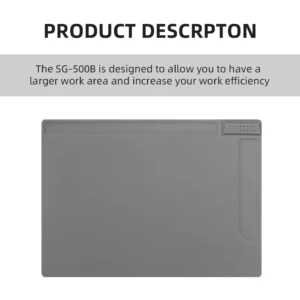 £35.00Protect your workbench and stay organised with a large 500...Select options This product has multiple variants. The options may be chosen on the product page
 -
Original price was: £49.00.£35.00Current price is: £35.00.Hold components steady and protect your workbench with a complete...Add to cart
-
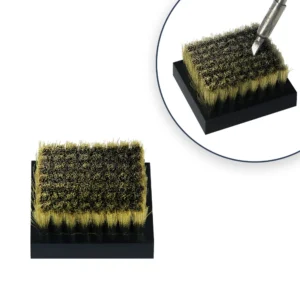
Original price was: £19.90.£13.90Current price is: £13.90.Clean your soldering tips without cooling them down. Full copper...Add to cart
-
-

-
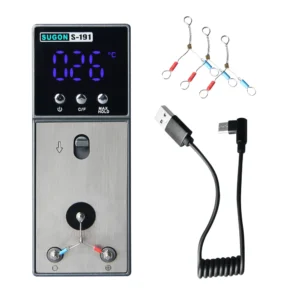
Original price was: £59.00.£44.50Current price is: £44.50.Take control of your soldering accuracy with instant tip temperature...Add to cart
-
Original price was: £159.00.£129.00Current price is: £129.00.Tackle soldering, hot air rework, and circuit testing with one...Add to cart
-
Original price was: £69.00.£53.00Current price is: £53.00.Upgrade to professional hot air rework and precision soldering in...Add to cart
-
Original price was: £22.90.£19.90Current price is: £19.90.Get station-quality temperature control in a portable 104g pen-style iron...Add to cart
-
Original price was: £27.90.£18.90Current price is: £18.90.Remove solder with one hand using integrated vacuum and heating...Add to cart



Soldering Accessories for Electronics Repair, Assembly, and Rework
The right accessories make the difference between a frustrating session and clean, consistent results. Whether you’re building a custom keyboard, repairing a Switch motherboard, or assembling an Arduino project, having the correct support tools alongside your soldering station determines how accurate, safe, and efficient your work becomes.
From tip cleaners that maintain heat transfer to ESD-safe mats that protect sensitive components, every accessory in this category solves a specific problem you’ll encounter during regular electronics work.
Tip Cleaning and Maintenance Tools That Extend Tip Life
A well-maintained tip transfers heat efficiently and wets solder cleanly. Brass wool removes flux residue and light oxidation without the thermal shock of a wet sponge, which can crack tip plating over time. A quick wipe every few joints keeps your tip in working condition and extends its lifespan significantly.
Tip tinner revives oxidised tips that refuse to flow solder. The compound combines powdered solder with mild flux, cleaning and re-coating the tip surface in one step. For regular maintenance, pair brass wool with tip tinner and your tips will last far longer than with cleaning alone.
Solder wick is essential for SMD rework and mistake correction. The fine copper braid draws molten solder off pads and IC pins through capillary action. Keep multiple widths available — narrow braid for fine-pitch components, wider braid for through-hole pads. Combine with a flux pen for cleaner, faster removal.
Work-Holding Tools That Free Both Hands
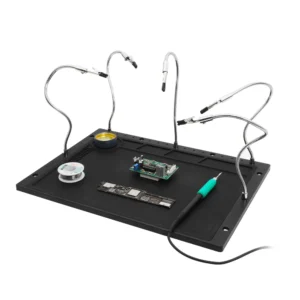
Helping hands hold PCBs, wires, and components steady while both hands operate the iron and solder. Adjustable arms position work at the right angle and distance for your task. Models with integrated magnification are particularly useful for SMD components like 0402 and 0603 resistors where visibility is critical.
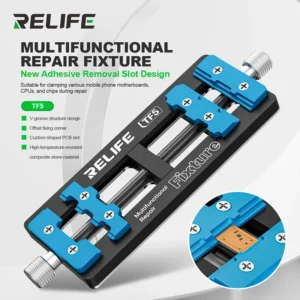
PCB holders grip boards securely with rotating bases that let you access all sides without repositioning. Adjustable angle platforms reduce neck and shoulder strain during extended sessions — an underrated benefit for anyone soldering regularly.
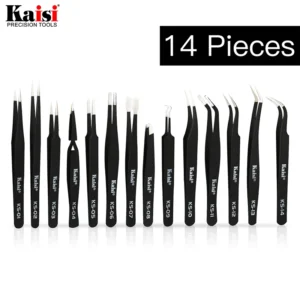
Precision ESD-safe tweezers handle components too small or heat-sensitive to grip by hand. For active SMD work, soldering tweezers with heated tips combine placing and soldering in a single tool, improving speed and accuracy on surface-mounted components.
Safety Accessories That Protect You and Your Components
Fume extractors remove harmful solder fumes before they reach your lungs. Lead-free solder produces more fumes than traditional tin-lead alloys, and rosin flux releases irritating particles even at moderate temperatures. A benchtop extractor with activated carbon filtration is essential for anyone soldering regularly or working in a space without strong natural ventilation.
ESD wrist straps and anti-static mats prevent static discharge that can silently destroy MOSFETs, microcontrollers, and logic board ICs. Modern electronics use increasingly sensitive components that fail from static charges you cannot feel. Ground yourself and your workspace whenever working on phone logic boards, game console motherboards, or any circuit with programmable components.
Silicone work mats protect your bench from heat damage and solder drips while providing a safe, ESD-friendly surface. Heat-resistant versions withstand direct contact with hot irons and hot air stations without melting or releasing fumes.
Build a Complete Soldering Setup
Accessories work best as a system. Pair your soldering station with a fume extractor, PCB holder, and helping hands for a bench that handles everything from basic through-hole work to fine-pitch SMD rework. Add flux and isopropyl alcohol for cleaning, and desoldering pumps for mistake correction.
Frequently Asked Questions
What soldering accessories do beginners actually need? Start with five essentials: brass wool for tip cleaning, helping hands for holding work, a desoldering pump for correcting mistakes, a flux pen for improving solder flow, and a silicone mat to protect your bench. This covers the fundamentals without overwhelming you with tools you won’t use yet. Add accessories as your projects demand them.
How do I know which accessories will improve my soldering? Identify your current frustrations. Struggling to see small components means magnification will help most. Tips blackening quickly points to brass wool and tip tinner. Breathing fumes during long sessions means a fume extractor is overdue. Accessories that eliminate specific bottlenecks in your workflow deliver real, immediate value.
Are expensive accessories worth the price difference? For tools you use constantly — brass wool, helping hands, work mats — quality matters. Cheap helping hands drift mid-job. Bargain fume extractors move air without filtering it properly. For accessories used occasionally, mid-range options perform adequately. Spend based on frequency of use rather than buying the cheapest or most expensive across the board.
Do I need ESD protection for hobby soldering? If you’re working on phone logic boards, game console motherboards, or any board containing microcontrollers or MOSFETs, yes. Static discharge can damage components without any visible sign, causing failures that are difficult to diagnose. An ESD wrist strap costs very little and eliminates a risk that could destroy expensive components instantly.
What is the difference between brass wool and a wet sponge for tip cleaning? A wet sponge cools the tip rapidly with each wipe, which causes thermal stress and can crack the tip plating over time. Brass wool cleans mechanically at working temperature, removing residue without the temperature drop. Most experienced solderers switch to brass wool permanently once they understand the difference.
Showing 1–12 of 14 results