

Preheating Platforms
Preheating platforms bring your entire PCB up to a stable intermediate temperature before soldering or rework — reducing thermal stress, improving solder flow, and protecting multilayer boards from the damage that localised heat alone causes.
Showing the single result
-
Original price was: £59.00.£44.50Current price is: £44.50.Take control of your soldering accuracy with instant tip temperature...Add to cart
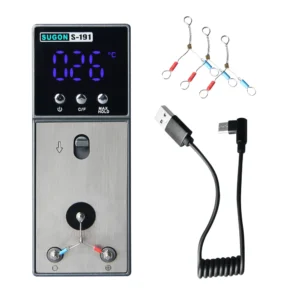
Preheating Platforms for PCB Rework, SMD Repair, and Reflow Preparation
When a cold PCB meets the intense localised heat of a soldering iron or hot air station, the sudden temperature differential creates thermal stress across the board. On multilayer PCBs, dense boards, and ceramic components, this stress causes delamination, cracked solder joints, lifted pads, and component damage that cannot always be seen immediately but causes failures later.
A preheating platform warms the entire board to a controlled intermediate temperature — typically 100°C–150°C — before localised heat is applied, narrowing the temperature differential and allowing rework to proceed with less heat, less time, and less risk.
Reducing Thermal Stress on Multilayer and Dense PCBs
Multilayer PCBs contain internal copper planes and via connections that act as heat sinks during rework, drawing heat away from the target area and requiring higher temperatures or longer dwell times to achieve reflow. This extended localised heating damages the PCB laminate, nearby components, and surrounding solder joints.
Preheating the board reduces the thermal mass effect by bringing the entire board closer to reflow temperature before hot air is applied. The target component reaches reflow temperature faster, with less airflow and lower peak temperature from the rework station. This protects the laminate, reduces the risk of tombstoning on adjacent SMD components, and produces cleaner, more controlled rework on complex boards. Combine with a hot air station and flux for a complete SMD rework setup.
Temperature Control for Different Board Types and Alloys
Effective preheating requires accurate, stable temperature control across the platform surface. Uneven heat distribution creates hot spots that pre-reflow solder joints before the rework area is ready, causing unintended component movement and joint disruption on densely populated boards.
Quality preheating platforms use PID regulation to hold surface temperature within a tight range across the entire heating area. For lead-free solder rework, a preheat temperature of 130°C–150°C brings the board close enough to the 217°C lead-free solidus temperature that hot air rework requires minimal additional heat. For leaded solder, 100°C–120°C preheat is typically sufficient. Adjustable temperature settings accommodate both alloy types and different board thicknesses.
Preheating Platforms in a Professional Rework Workflow
A preheating platform sits at the centre of a professional SMD rework workflow. The board is placed on the platform and brought to preheat temperature while the hot air station and desoldering rework station are prepared. Once the board reaches target preheat temperature, rework proceeds with the platform maintaining bottom-side heat throughout the process.
This bottom-side heating approach mirrors professional reflow oven profiles, where boards are heated from below during reflow and cooled in a controlled manner afterwards. For repair technicians working on phone logic boards, console motherboards, and BGA components, a preheating platform brings bench rework closer to factory reflow conditions than hot air alone can achieve. Pair with a PCB holder positioned over the platform to hold the board stable during rework, and isopropyl alcohol with PCB cleaning tools for post-rework cleanup.
Where to Buy Preheating Platforms in the United Kingdom?
NeoSoldering stocks preheating platforms with fast UK delivery, no hidden import fees, and all prices in British Pounds. Free delivery is available on orders over £50.
Browse our hot air stations, desoldering rework stations, flux, and soldering accessories to build a complete professional rework bench.
Frequently Asked Questions
What is a preheating platform used for?
A preheating platform heats a PCB uniformly from below to an intermediate temperature before soldering or hot air rework. This reduces the temperature differential between the board and the rework area, lowering the peak heat required for reflow, protecting the PCB laminate from thermal stress, and reducing the risk of damage to components and solder joints adjacent to the rework area.
What temperature should I preheat my PCB to?
For lead-free solder rework, a preheat temperature of 130°C–150°C is typical. For leaded solder, 100°C–120°C is generally sufficient. The goal is to bring the board close enough to the solder solidus temperature that hot air rework requires minimal additional heat to achieve reflow, without pre-reflowing existing joints on the board before rework begins.
Do I need a preheating platform for basic SMD rework?
For simple SMD component replacement on single or double-sided boards, a preheating platform is helpful but not always essential. For multilayer PCBs, BGA rework, phone logic boards, console motherboards, and any board with significant thermal mass, a preheating platform produces meaningfully better results and reduces the risk of board and component damage during rework.
Can I use a preheating platform as a reflow oven substitute?
A preheating platform can reflow solder paste on simple single-sided PCBs in some circumstances, but it is not a substitute for a proper reflow oven. Reflow ovens follow a controlled temperature profile with defined ramp, soak, reflow, and cooling stages. A preheating platform maintains a static temperature and lacks the profiled heating and cooling control that consistent, reliable SMD assembly requires.
What size preheating platform do I need?
Choose a platform large enough to accommodate the largest board you regularly work on, with some margin beyond the board edge for even heat distribution. Phone logic boards and small PCBs suit compact platforms. Console motherboards, laptop motherboards, and larger assemblies require a larger heating surface. A platform too small for the board creates uneven preheating with cooler edges, reducing the thermal stress protection the platform is designed to provide.
Showing the single result