

Microscopes For Electronics
Electronics microscopes give you the magnification and clarity to inspect PCB traces, place SMD components, and spot solder defects that are invisible to the naked eye.
Showing all 2 results
-
Original price was: £149.00.£99.00Current price is: £99.00.Upgrade your microscope with 60MP clarity and 4K live video....Add to cart
-
Original price was: £59.00.£44.50Current price is: £44.50.Take control of your soldering accuracy with instant tip temperature...Add to cart
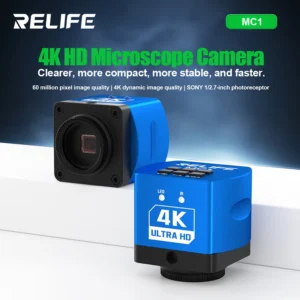
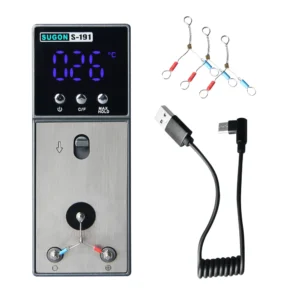
Electronics Microscopes for PCB Inspection and SMD Soldering
Working with fine-pitch components, 0402 resistors, or damaged PCB traces means you need more than good eyesight. An electronics microscope gives you a stable, magnified view of your work so you can solder accurately, inspect joints cleanly, and catch faults before they become failures.
Unlike a basic magnifying glass or loupe, a dedicated electronics microscope holds its position, frees both hands, and gives you consistent focal depth across the whole board.
See Every Joint, Trace, and Component Clearly
PCB inspection microscopes typically offer 7x to 45x magnification, which covers everything from board-level fault finding to fine-pitch IC soldering. A quality optic with good working distance — the gap between the lens and your PCB — lets you manoeuvre tools underneath while keeping a clear, stable image. This is critical when you’re placing 0201 components or checking solder bridges on a QFP package.
A Steady View That Frees Both Hands
One of the biggest advantages of a bench microscope over a handheld loupe is stability. With your workpiece locked in focus on a PCB holder, both hands are free to hold your soldering iron and tweezers. That makes SMD rework, pad repair, and component placement significantly more accurate and less stressful on your eyes during long sessions.
Digital or Stereo — Choose the Right Type for Your Bench
Stereo microscopes give you true depth perception through dual eyepieces, making them ideal for hands-on SMD soldering and component placement where you need to judge distances accurately.
Digital microscopes connect via HDMI or USB and display a live feed on a monitor or screen. They are well suited to inspection, documentation, and sharing your work — popular with repair techs who want to show clients exactly what the fault is.
Both types work well alongside a soldering station, soldering tweezers, and a PCB holder for a complete SMD rework setup.
What to Use With Your Electronics Microscope
Good magnification is only part of the picture. Helping hands and PCB holders keep your board stable and positioned at the right angle under the lens. Soldering tweezers give you the fine control needed when placing components in your field of view. After rework, use isopropyl alcohol and PCB cleaning tools to inspect flux residue clearly under magnification before sign-off.
Frequently Asked Questions
What magnification do I need for PCB inspection? For general PCB inspection and fault finding, 7x to 20x is sufficient. For fine-pitch SMD work on components like 0402 or 0201 parts, 20x to 45x gives you the detail needed to place and inspect joints accurately.
What is the difference between a digital and stereo microscope for electronics? A stereo microscope uses dual eyepieces to give true 3D depth perception, which helps when soldering by hand. A digital microscope outputs to a screen and is better suited to inspection, documentation, and showing others your work. For active SMD soldering, most technicians prefer stereo.
How much working distance do I need? A working distance of at least 100mm is recommended for electronics work. This gives you enough clearance to manoeuvre a soldering iron or tweezers underneath the lens without losing focus or knocking the optic.
Can I use an electronics microscope for phone and console repair? Yes. Microscopes are widely used in phone repair for inspecting ball grid array pads, identifying lifted traces, and checking solder joints on logic boards. The same setup works for console motherboard repairs and micro-soldering on Nintendo Switch and PlayStation hardware.
Do I need a microscope if I already have a magnifying glass? A magnifying glass or loupe is useful for quick checks but lacks the stability, working distance, and consistent focal plane of a bench microscope. For regular SMD work or professional repair, a dedicated microscope reduces eye strain,improves accuracy, and speeds up fault diagnosis significantly.
Showing all 2 results