

Helping Hands
Helping hands hold your PCB, wires, and components steady while both hands stay free for your soldering iron and solder — making precise, clean joints significantly easier on every project.
Showing the single result
-
Original price was: £59.00.£44.50Current price is: £44.50.Take control of your soldering accuracy with instant tip temperature...Add to cart
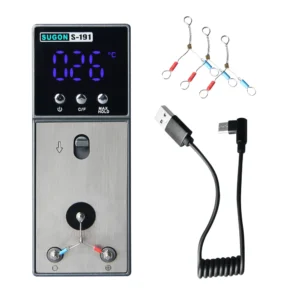
Helping Hands
Helping hands hold your PCB, wires, and components steady while both hands stay free for your soldering iron and solder — making precise, clean joints significantly easier on every project.
[PRODUCT GRID HERE]
Helping Hands for Electronics Soldering, PCB Work, and Component Assembly
Trying to hold a PCB, position a component, and manoeuvre a soldering iron simultaneously is one of the most common frustrations in electronics work. Helping hands solve this directly — adjustable arms grip and position your work at the right angle and height, leaving both hands free to focus on the solder joint.
From basic two-arm clamp stands to multi-arm flexible setups with integrated magnification and lighting, helping hands are one of the most impactful additions to any soldering bench at any skill level.
Adjustable Arms That Hold Work Exactly Where You Need It
The core value of a helping hands unit is positional flexibility. Articulated arms with alligator clips or PCB clamps adjust to hold boards flat, angled, or vertical — whatever the joint requires. Quality arms lock firmly in position without drifting under the weight of the board, which is the most common failure point of cheap helping hands units.
For SMD work and fine-pitch soldering, stable positioning is critical. A board that shifts mid-joint causes bridges, cold joints, and misplaced components. A firm, well-positioned helping hands unit removes that variable entirely, letting you focus on technique rather than managing your workpiece. Pair with a PCB holder for larger boards that need edge support alongside component-level clamping.
Integrated Magnification for Small Components and Fine Work
Many helping hands units include a magnifying glass mounted on an adjustable arm, combining work-holding and visibility in a single tool. This is particularly useful for 0402 and 0603 SMD components, fine-pitch IC leads, and any detail work where standard eyesight struggles to resolve small features clearly.
Built-in LED lighting on magnified models illuminates the work area directly, eliminating shadows cast by your hands and iron that make fine soldering harder than it needs to be. For hobbyists working with increasingly small components on Arduino, keyboard, and console repair projects, integrated magnification removes one of the most common barriers to accurate SMD work.
Helping Hands as Part of a Complete Bench Setup
Helping hands work best alongside a full organised bench. Position them between your soldering station and your dominant hand so the work is always within comfortable reach of your iron. Use a silicone mat underneath to protect your bench and provide an ESD-safe work surface for sensitive components.
For rework sessions involving hot air, combine helping hands with a preheating platform to support the board thermally while the arms hold it positionally. After soldering, isopropyl alcohol and PCB cleaning tools remove flux residue for a clean finish.
Where to Buy Helping Hands in the United Kingdom?
NeoSoldering stocks helping hands with fast UK delivery, no hidden import fees, and all prices in British Pounds. Free delivery is available on orders over £50.
Browse our soldering stations, PCB holders, and soldering accessories to build a complete, organised bench setup.
Frequently Asked Questions
What are helping hands used for in electronics?
Helping hands hold PCBs, wires, and components in a fixed position during soldering, freeing both hands to operate the iron and feed solder. They are particularly useful for single-person soldering where a second pair of hands would otherwise be needed to hold the workpiece steady.
What should I look for in a quality helping hands unit?
Look for arms that lock firmly in position without drifting, clamps with smooth jaws that grip without damaging PCB edges or component leads, and a weighted base that stays stable on the bench. Avoid units with weak spring joints that drift under the weight of a populated board — this defeats the purpose of the tool entirely.
Do I need helping hands if I already have a PCB holder?
The two tools serve different purposes. A PCB holder grips the board by its edges for access to both sides during soldering. Helping hands use adjustable clamp arms to hold boards, wires, and individual components at any angle. For most bench setups, both tools complement each other — a PCB holder for board-level work and helping hands for component positioning and wire soldering.
Can helping hands damage my PCB or components?
Cheap alligator clips with serrated jaws can scratch PCB surfaces and damage component leads if clamped directly. Look for helping hands with smooth or silicone-lined clamp jaws, or use a piece of heat-resistant material between the clamp and the board edge. Quality units are designed to grip firmly without marking sensitive surfaces.
Are helping hands with magnification worth it?
For anyone working regularly with SMD components, fine-pitch ICs, or detail repairs on console and phone boards, integrated magnification adds genuine value. It eliminates the need for a separate magnifying glass or loupe and positions the magnified view exactly where you need it relative to your work. If your eyesight makes small component work difficult, magnified helping hands are one of the most immediately useful upgrades for your bench.
Showing the single result