

Desoldering Rework Stations
Desoldering and rework stations give you the precision to remove components cleanly, correct mistakes, and restore boards that a standard soldering iron alone cannot fix.
Showing the single result
-
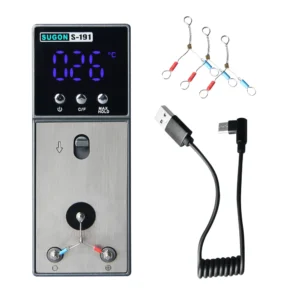
Original price was: £59.00.£44.50Current price is: £44.50.Take control of your soldering accuracy with instant tip temperature...Add to cart
Desoldering and Rework Stations for PCB Repair and Component Removal
When a component needs to come off a board cleanly — whether it’s a failed IC, a bridged QFP package, or a damaged capacitor — the right rework station makes the difference between a successful repair and a lifted pad.
Desoldering and rework stations combine controlled heat with vacuum or hot air to remove solder and components without damaging surrounding parts, PCB traces, or adjacent SMD components. They are essential tools for anyone moving beyond basic soldering into board-level repair, phone repair, or console rework.
Dedicated Desoldering Stations for Fast, Clean Through-Hole Removal
A dedicated desoldering station integrates a heated nozzle with a built-in vacuum pump, heating the joint and extracting solder in a single action. This is significantly faster and more effective than using a separate iron and desoldering pump, especially when clearing multiple through-hole component legs from a populated board.
The vacuum mechanism pulls molten solder directly into a chamber, leaving the pad and hole clean for replacement components. Adjustable temperature and suction settings let you dial in the right combination for different board thicknesses and component sizes. Pair with flux for cleaner solder flow and easier extraction on older or oxidised joints.
Hot Air Rework Stations for SMD and IC Removal
Hot air rework stations direct precisely heated airflow onto a component, melting all solder joints simultaneously for clean, damage-free removal. This is the correct approach for SMD components, BGA chips, QFP packages, and shielded connectors where a soldering iron cannot reach all joints at once.
PID-regulated temperature control holds airflow heat stable at the nozzle, preventing the temperature spikes that damage PCB laminates or nearby components. Adjustable airflow lets you work on a single 0402 resistor with low air volume or clear a large connector with higher flow. Compatible nozzles in different diameters and shapes direct heat precisely where needed.
For full SMD rework capability, pair your hot air station with a preheating platform to reduce thermal stress on multilayer boards, and soldering tweezers for accurate component placement during reflow.
2-in-1 Rework Stations for a Complete Bench Setup
Combined desoldering and rework stations integrate hot air and a soldering iron in a single unit, giving you both tools on one compact station. This suits repair technicians and hobbyists who need to switch between standard soldering and component removal without separate stations taking over the bench.
A 2-in-1 station works alongside a PCB holder and helping hands to keep boards stable during rework, and isopropyl alcohol and PCB cleaning tools to remove flux residue after repairs.
Where to Buy Desoldering and Rework Stations in the United Kingdom?
NeoSoldering stocks a curated range of desoldering and rework stations with fast UK delivery, no hidden import fees, and all prices in British Pounds. Free delivery is available on orders over £50.
Our range covers dedicated desoldering stations, hot air rework units, and 2-in-1 combined stations — the formats most used by UK repair technicians, hobbyists, and electronics professionals. Browse our soldering stations, hot air stations, and soldering accessories to build a complete rework setup.
Frequently Asked Questions
What is the difference between a desoldering station and a rework station?
A desoldering station uses a heated nozzle combined with a vacuum pump to remove solder from through-hole joints in a single action. A rework station uses hot air to simultaneously heat all joints on a surface-mounted component for clean removal. Many combined units offer both functions in one station, covering through-hole desoldering and SMD rework from a single bench unit.
Can I use a hot air rework station for through-hole components?
Hot air is less effective for through-hole desoldering because the airflow cannot direct heat precisely into the hole and extract the solder simultaneously. A dedicated desoldering station with a vacuum nozzle is faster and cleaner for through-hole work. Hot air suits SMD components, IC packages, and surface-mounted connectors where all joints are accessible from above.
What temperature should I use for SMD rework?
Most SMD rework is performed between 320°C and 380°C depending on solder type and component. Lead-free solder requires higher temperatures, typically 350°C–380°C. Always start at the lower end and increase gradually. Using a preheating platform to warm the board to 100°C–150°C before hot air rework reduces the temperature differential and protects the PCB laminate.
Do I need a rework station if I already have a soldering iron?
For through-hole work and basic SMD soldering, a soldering iron is sufficient. For removing SMD components, BGA chips, QFP packages, or any multi-joint surface-mounted part, a rework station is the correct tool. Attempting this with a soldering iron risks lifted pads, damaged traces, and broken components. If you’re doing board-level repair regularly, a rework station is an essential addition to your bench.
What accessories do I need for PCB rework?
A complete rework setup typically includes flux for improving solder flow, a preheating platform for multilayer boards, a PCB holder for stability, soldering tweezers for component placement, and isopropyl alcohol with PCB cleaning tools for post-rework cleanup.
Showing the single result