

Under £100 gets you a genuinely capable soldering station in 2026, not just a basic iron. This guide compares eight in-stock options across three types — JBC-style cartridge stations, hot air rework combos, and traditional PID irons — so you can match the station to what you actually solder, from Arduino projects to phone and console repair.
Quick answer: the YIHUA 939D+ III EVO (£69) is the best all-rounder, with PID control, 4 memory channels and built-in storage. If you want JBC-style cartridge heat-up speed, the SUGON A9 (£99) heats in around 2 seconds. On the tightest budget, the YIHUA 937D+ (£38.90) covers the basics reliably.
UK stock · dispatched within 2 business days · free UK shipping on every order · 60-day returns · 12-month warranty
- 1YIHUA 939D+ III EVO— Best Overall, £69.00
- 2SUGON A9— Best Cartridge Station, £99.00
- 3AIFEN A5 Pro— Best for Handle Flexibility, £99.00
- 4Kaisi 8512P— Best 2-in-1 Under £100, £99.00
- 5YIHUA 938BD-II— Best for SMD/BGA Rework, £64.50
- 6YIHUA 8786D— Best Budget Hot Air Combo, £53.00
- 7YIHUA 926LED-IV— Best for Precision Hobbyist Work, £49.00
- 8YIHUA 937D+— Cheapest Starter Station, £38.90
The 8 Best Soldering Stations Under £100
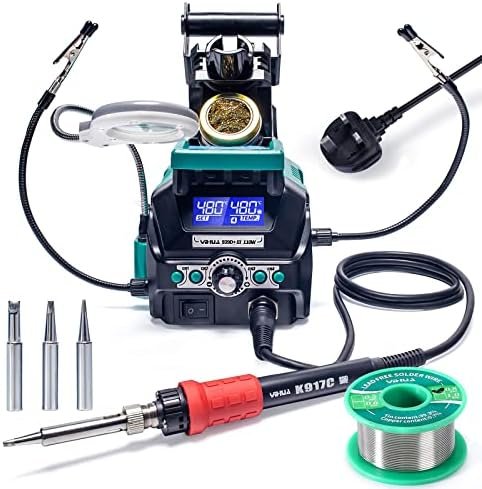
YIHUA 939D+ III EVO, Best Overall
PID control · 4 memory channels · dual displays · X2 storage system
The most complete package in this list. PID temperature control keeps the tip stable under load, 4 memory channels let you save presets for different jobs, and the integrated X2 storage system plus LED-lit magnifier and helping hands mean you’re not buying separate accessories on top. It’s built for general electronics work rather than one specialist task, which is exactly why it suits most buyers first.
Best for: general electronics assembly, repair work, hobbyists wanting one station that covers most jobs
Key Features:
- PID temperature control
- 4 memory channels
- Dual temperature displays
- Integrated storage, magnifier and helping hands
Best Applications:
- General electronics assembly
- Repair and rework tasks
- Hobbyist and maker projects
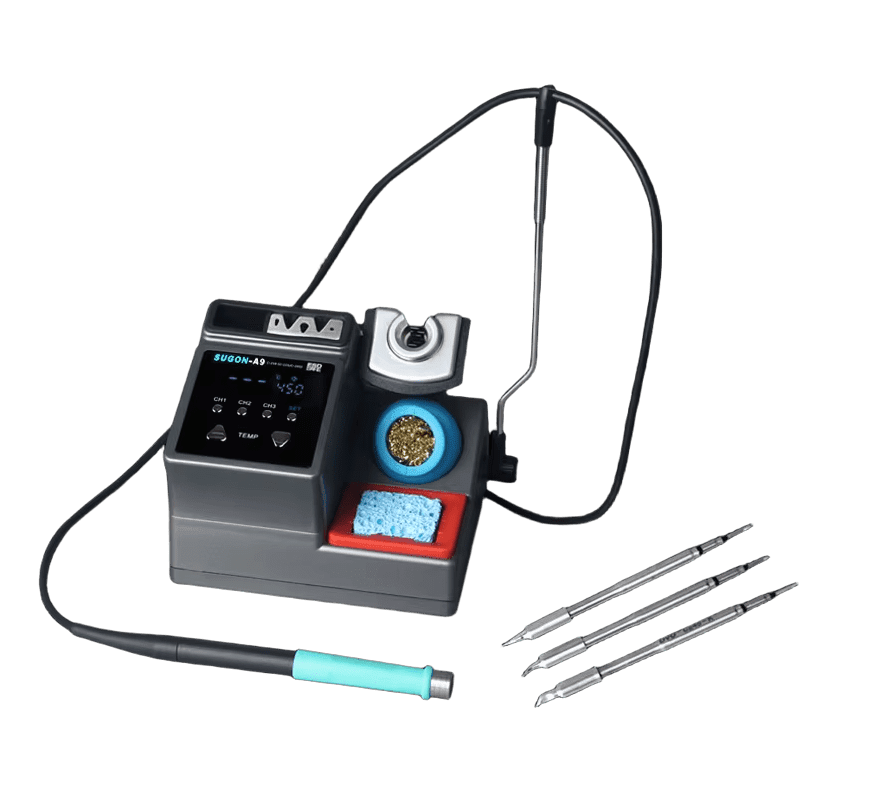
SUGON A9, Best Cartridge Station
120W · ~2-second heat-up · PID control · 3 memory presets
JBC-style cartridge technology at under £100. The A9 heats in around 2 seconds from cold and automatically compensates temperature as you work, which matters most when you’re moving between joints quickly on phone or console boards. Available in T245, T210 or T115 cartridge configurations depending on the tip size you need.
Best for: console repair, phone repair, PCB rework, precision SMD soldering
Key Features:
- 120W cartridge heating
- ~2-second heat-up
- PID control with auto compensation
- 3 memory presets
Best Applications:
- Console and phone repair
- PCB rework
- Precision SMD soldering
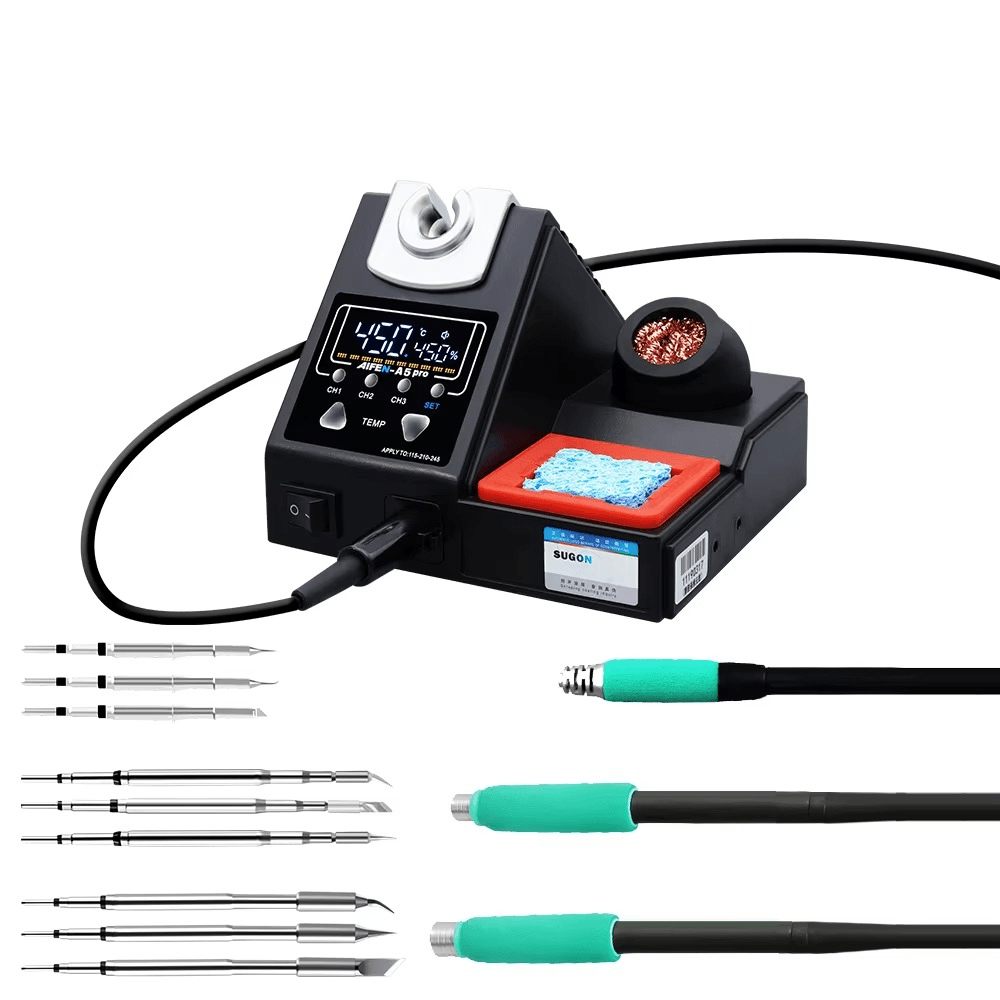
AIFEN A5 Pro, Best for Handle Flexibility
120W · interchangeable handles · LCD display · auto-sleep
Also JBC-compatible cartridge performance, but the A5 Pro’s advantage is handle flexibility — T115, T210 and T245 handles all run on the same base station, and it’s available as a complete 3-handle kit with 9 cartridge tips. If you expect to work across different tip sizes regularly rather than settling on one, this is the more adaptable buy over the A9.
Best for: workshops needing multiple tip sizes, buyers who want a complete cartridge kit in one purchase
Key Features:
- 120W, ~2-second heat-up
- Interchangeable T115/T210/T245 handles
- LCD chip temperature display
- Auto-sleep protection
Best Applications:
- Mixed tip-size workshops
- Console and phone repair
- Buyers wanting a complete kit
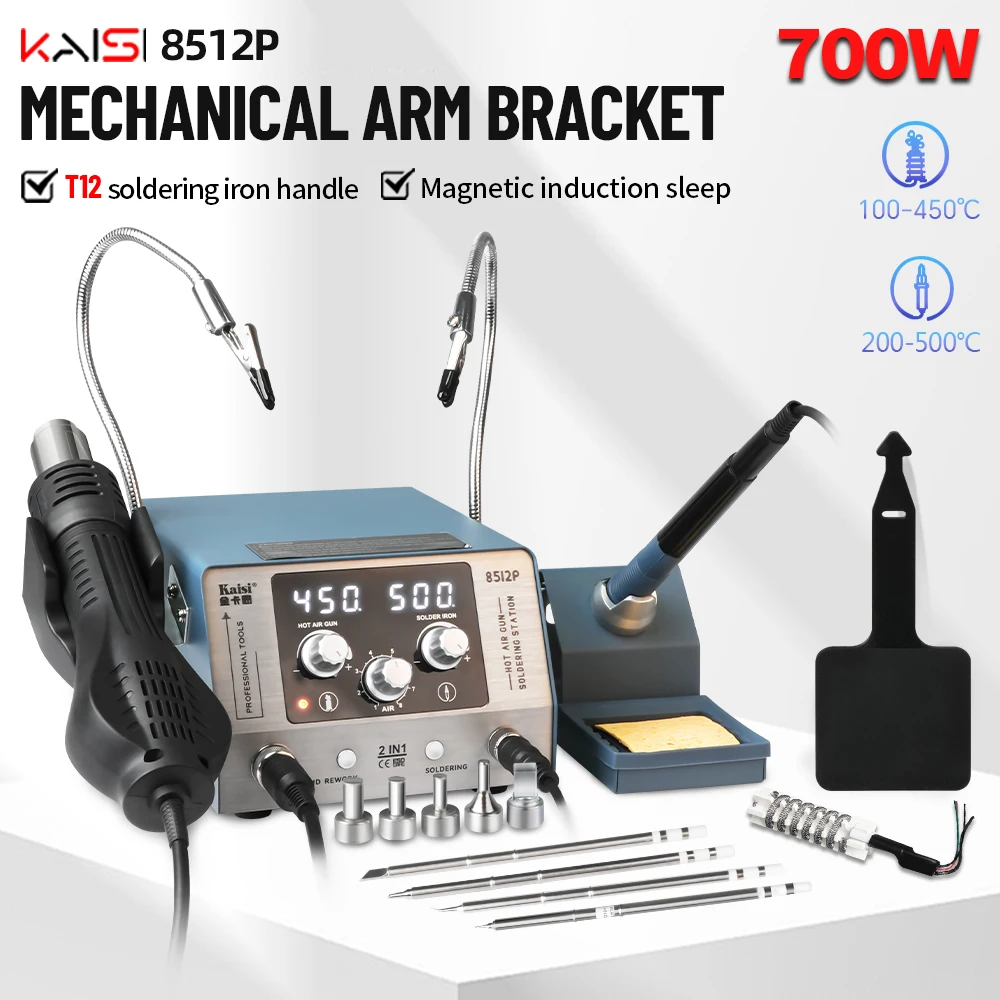
Kaisi 8512P, Best 2-in-1 Under £100
700W · T12 cartridge iron + hot air · ±2°C stability · dual LED displays
The only station on this list combining T12 cartridge accuracy with a separate hot air gun for under £100. Ceramic heating and microcomputer control hold temperature within about 2°C, and it comes with 4 T12 cartridges plus 5 air gun nozzles, so you’re not buying accessories separately to get started with rework.
Best for: phone repair, SMD rework, buyers who need both an iron and hot air in one station
In the Kit:
- 4x T12 cartridges
- 5x air gun nozzles
- Spare heating core
Best Applications:
- Phone repair
- SMD rework
- Workshops wanting iron + hot air in one

YIHUA 938BD-II, Best Hot Air for SMD/BGA
740W · hot air 100–480°C, 120L/min · ESD-safe iron · PID control
The highest hot air output on this list at 740W, with a wide 100–480°C range and strong airflow for shifting heat on larger ground planes. Combined with a PID-controlled, ESD-safe soldering iron in the same compact unit, it’s built specifically for SMD rework and BGA work rather than general assembly.
Best for: SMD rework, BGA reflow, console and laptop motherboard repair
Key Features:
- 740W hot air, 100–480°C
- 120 L/min airflow
- ESD-safe soldering iron
- PID temperature control
Best Applications:
- SMD rework
- BGA reflow
- Laptop motherboard repair
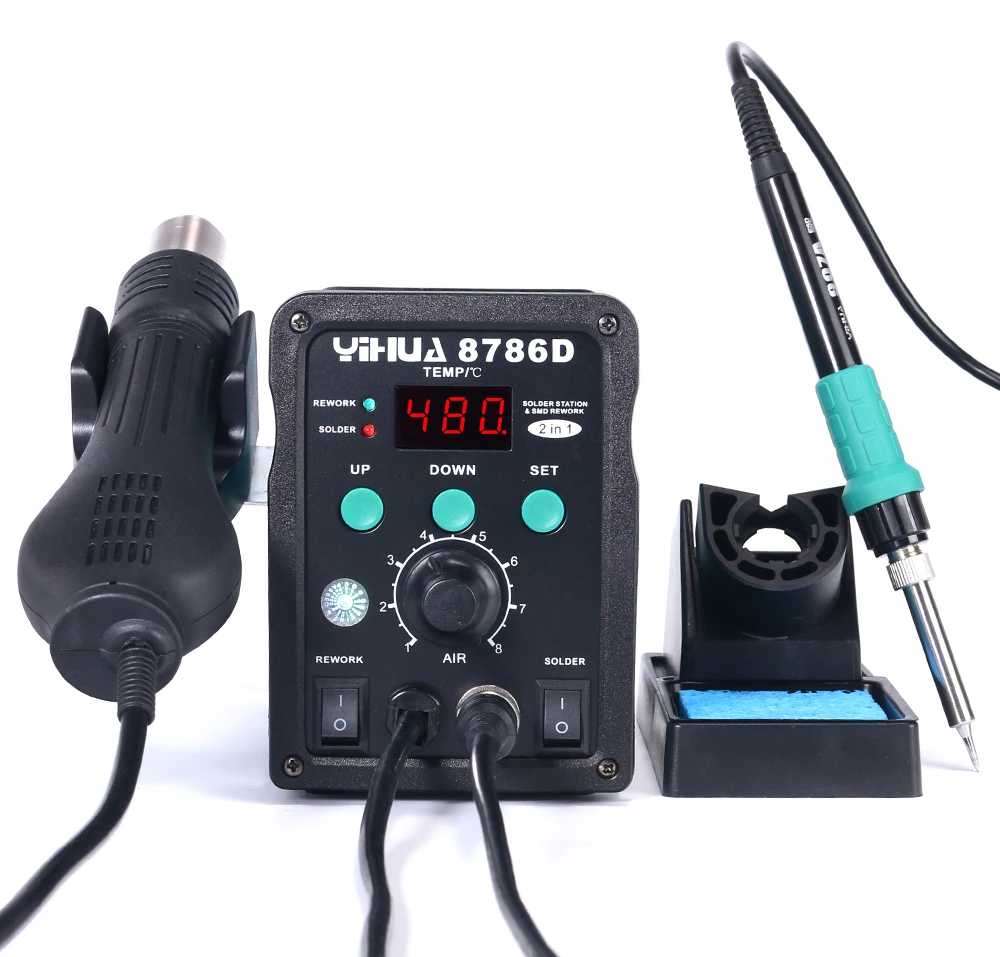
YIHUA 8786D, Best Budget Hot Air Combo
Hot air + iron combo · PID with auto correction · anti-static
The entry point into hot air rework without paying 938BD-II money. PID control with automatic correction keeps both the iron and the hot air gun stable, and anti-static protection covers both tools. It won’t match the 938BD-II’s raw power, but for makers moving beyond a basic iron for the first time it’s a lower-cost way in.
Best for: console repairs, Arduino projects, first-time hot air buyers
Key Features:
- 2-in-1 iron + hot air
- PID with automatic correction
- Anti-static on both tools
Best Applications:
- Console repairs
- Arduino projects
- First hot air station
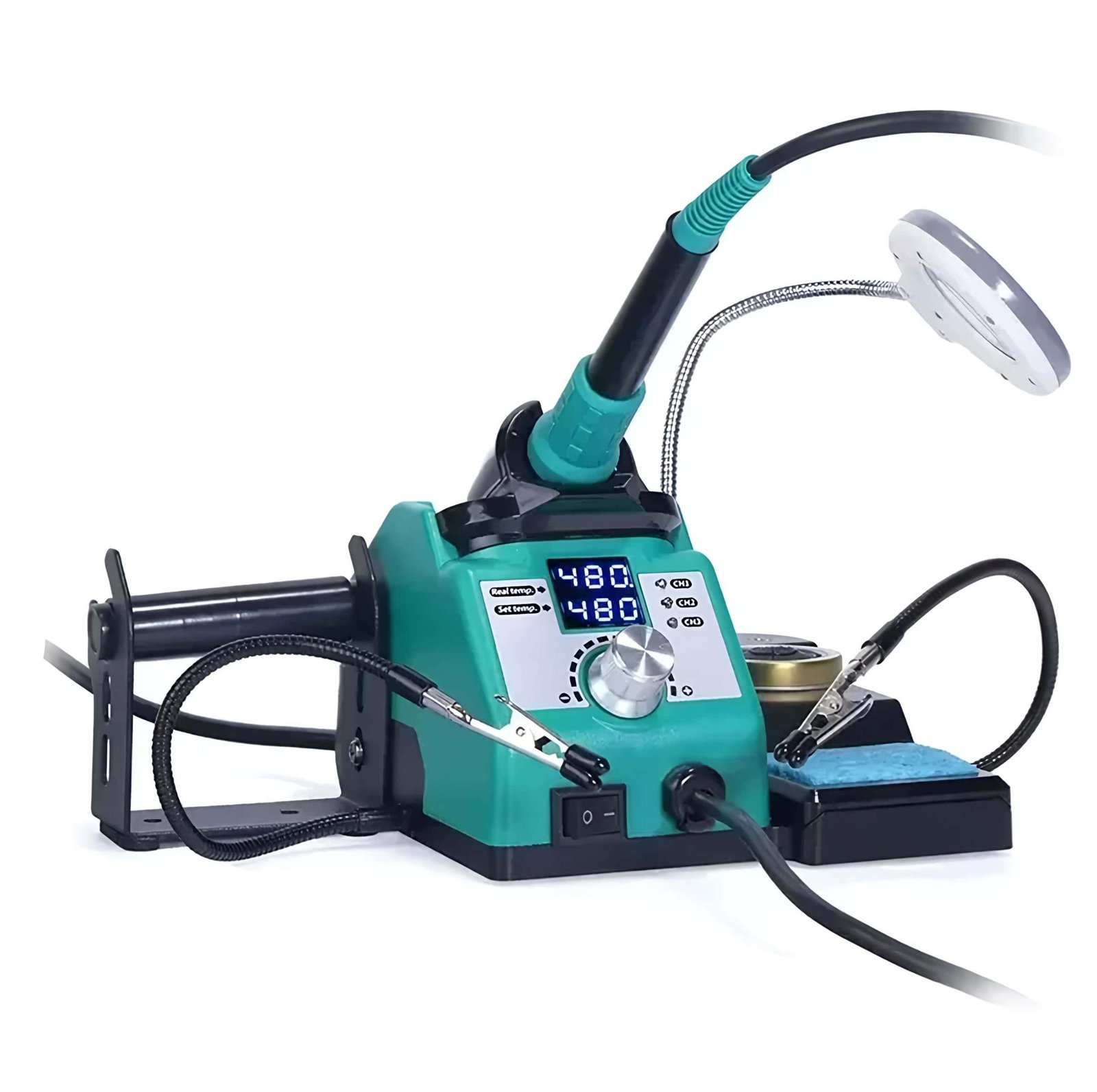
YIHUA 926LED-IV, Best for Precision Hobbyist Work
±1–2°C accuracy · dual LED displays · includes helping hands
PID precision at hobbyist prices, with dual LED displays showing both set and real-time temperature so you can see accuracy at a glance rather than guessing. Bundled helping hands make it a reasonable one-purchase setup for Arduino builds, keyboard assembly, and light SMD work.
Best for: Arduino builds, console repair, keyboard assembly, light SMD rework
Key Features:
- ±1–2°C PID accuracy
- Dual LED temperature displays
- Includes soldering hands
Best Applications:
- Arduino and maker builds
- Console repair
- Light SMD rework
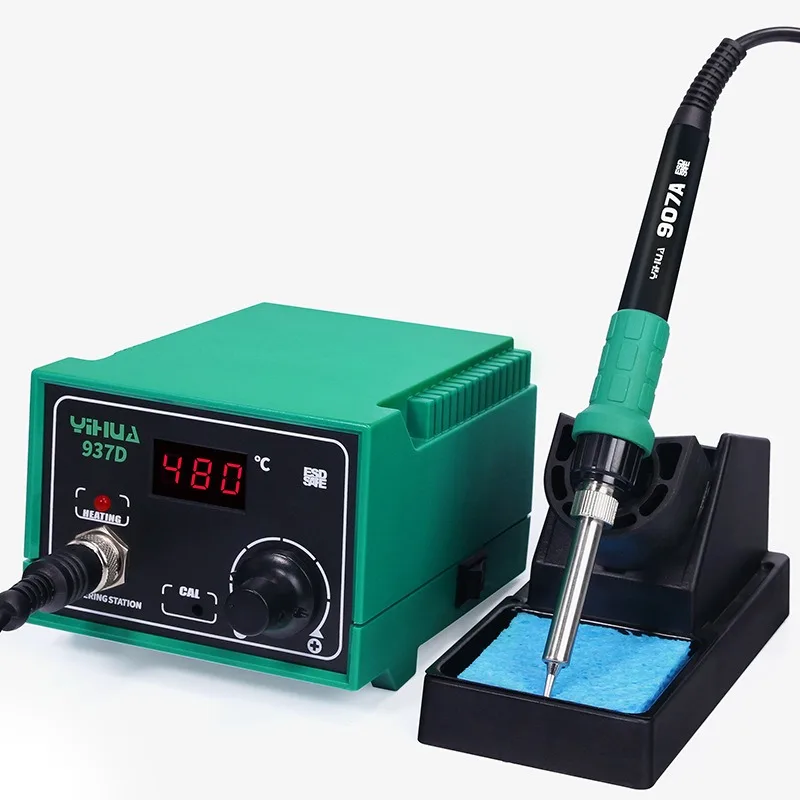
YIHUA 937D+, Cheapest Starter Station
200–450°C range · anti-static protection · fault detection
No hot air, no cartridge speed, no memory presets — just a reliable adjustable-temperature iron with anti-static protection and fault detection built in. If you’re soldering your first few projects and don’t yet know whether you’ll stick with the hobby, this is the lowest-risk way to find out.
Best for: first-time buyers, basic electronics and wiring work, occasional use
Key Features:
- 200–450°C adjustable range
- Anti-static protection
- Fault detection system
Best Applications:
- First-time soldering
- Basic electronics and wiring
- Occasional/light use
What to Look For Under £100
At this price point, the differences between stations come down to four things: temperature stability, tip/cartridge system, wattage, and whether you need hot air alongside the iron.
Temperature control
Look for PID control rather than a simple on/off thermostat. PID actively corrects temperature drift as the tip touches cold joints, so it recovers faster and holds accuracy within a couple of degrees instead of swinging widely.
Cartridge vs traditional tips
Cartridge systems (T12, C210, C245) put the heating element inside the tip itself, so they heat in 2–5 seconds instead of 30–60. Traditional irons are cheaper to buy but slower to heat and slower to recover mid-joint.
Wattage
60–120W is plenty for hobbyist electronics, PCB work, and phone/console repair. You only need higher wattage (700W+ hot air) if you’re doing BGA reflow or working on larger ground planes that pull heat away fast.
ESD/anti-static protection
If you’re working on populated boards, an ESD-safe iron and grounded station protect components from static discharge. Worth checking for on any station you’re using near live electronics rather than just wire and cable work.
Cartridge (JBC-Style) vs Traditional Soldering Irons
Industrial names like Hakko and JBC popularised cartridge-tip technology, where the heating element sits inside the tip for near-instant heat-up and fast recovery between joints. That speed comes at a price on genuine Hakko/JBC hardware, often £150–£300+ for a station.
Budget cartridge stations from SUGON, AIFEN and Kaisi use the same T12/C210/C245-style cartridge principle at a fraction of the cost, which is why they’ve become the default recommendation in phone and console repair communities. You give up some of the refinement of the original hardware, but for hobbyist and semi-professional repair work the heat-up speed and recovery are genuinely comparable.
Traditional stations (YIHUA’s 937D+, 926LED-IV, 939D+ III EVO) use a conventional heating element with a separate tip. They’re slower to heat from cold but cost less, and for general electronics assembly — where you’re not swapping joints every few seconds — the difference in practice is small.
The golden rule either way: keep the tip tinned and clean between joints, work at the lowest temperature that melts your solder reliably, and never leave a station on and unattended at full heat. Excess heat is what shortens tip life and damages components, not the wattage rating on the box.
Comparison Table
| Station | Price | Type | Best For |
|---|---|---|---|
| YIHUA 939D+ III EVO | £69.00 | Traditional, PID | Best overall / general use |
| SUGON A9 | £99.00 | Cartridge | Fast heat-up, console/phone repair |
| AIFEN A5 Pro | £99.00 | Cartridge | Interchangeable handles, mixed tip sizes |
| Kaisi 8512P | £99.00 | Cartridge + hot air | Iron and hot air in one, under £100 |
| YIHUA 938BD-II | £64.50 | Traditional + hot air | SMD/BGA rework |
| YIHUA 8786D | £53.00 | Traditional + hot air | Budget hot air combo |
| YIHUA 926LED-IV | £49.00 | Traditional, PID | Precision hobbyist work |
| YIHUA 937D+ | £38.90 | Traditional | Cheapest starter station |
Frequently Asked Questions
Which soldering station is best under £100?
For most buyers, the YIHUA 939D+ III EVO (£69) is the strongest all-round choice, with PID control, 4 memory channels and built-in storage. If you specifically need cartridge-style fast heat-up for repair work, the SUGON A9 (£99) is the better fit.
Which is better, Weller or Hakko?
Both are established industrial names and either is a safe choice if budget isn’t a constraint, typically £150–£300+ for a full station. Hakko’s FX-888D is generally rated for thermal recovery, while Weller stations are known for build durability. At under £100, the cartridge stations in this guide (SUGON A9, AIFEN A5 Pro, Kaisi 8512P) use the same underlying cartridge principle at a lower price, with some trade-off in refinement rather than core function.
What is the golden rule of soldering?
Keep the tip clean and tinned, and work at the lowest temperature that reliably melts your solder. Running a station hotter than necessary doesn’t speed up the job, it just shortens tip life and increases the risk of heat damage to components and board traces.
What wattage do I need for hobbyist soldering?
60–120W covers the vast majority of hobbyist and repair work. Higher wattage mainly matters for hot air rework on larger boards, where more airflow and heat output is needed to reflow components without holding the gun in one place too long.
Do I need a hot air gun with my soldering station?
Only if you’re doing SMD rework, removing multi-pin components, or reflow work. For general through-hole soldering, wiring, and most repair jobs, a good iron alone is enough — hot air is a specific tool for a specific job, not a general upgrade.
Browse the full range of soldering stations in stock, including options above £100 for professional and industrial use.
Browse Soldering Stations →