

Ultrasonic Cleaners
Ultrasonic cleaners remove flux residue, contamination, and oxidation from PCBs, components, and tools using high-frequency sound waves — reaching every surface simultaneously, including under low-clearance components that brushes and swabs cannot access.
Showing the single result
-
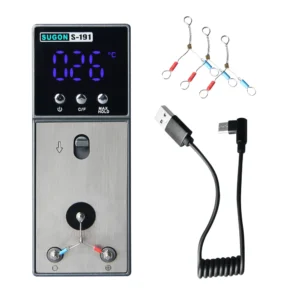
Original price was: £59.00.£44.50Current price is: £44.50.Take control of your soldering accuracy with instant tip temperature...Add to cart
Ultrasonic Cleaners for PCB Cleaning, Electronics Repair, and Component Maintenance
Manual PCB cleaning with brushes and isopropyl alcohol removes surface residue effectively but struggles with contamination trapped under low-clearance IC packages, inside connector housings, and within via holes. An ultrasonic cleaner eliminates this limitation — high-frequency cavitation reaches every exposed surface on a populated board simultaneously, dislodging and dissolving contamination without manual scrubbing or disassembly.
Used in professional repair workshops, electronics manufacturing, and increasingly on hobbyist benches, ultrasonic cleaners produce a level of board cleanliness that manual cleaning methods cannot consistently match.
How Ultrasonic Cleaning Works
Ultrasonic cleaners operate by generating high-frequency sound waves — typically between 35kHz and 45kHz — through a liquid cleaning solution. These waves create millions of microscopic cavitation bubbles that form and collapse rapidly against every submerged surface. The energy released by collapsing bubbles dislodges contaminants from surfaces, including areas completely inaccessible to brushes and swabs.
The cleaning liquid carries dislodged contamination away from the surface and into suspension, leaving the cleaned part free of residue. For PCB cleaning, a purpose-made electronics cleaning solution or diluted isopropyl alcohol provides effective flux and contamination removal without damaging board laminates, component markings, or connector contacts. After ultrasonic cleaning, rinse with clean solution and dry thoroughly before powering up — gentle warm air from a hot air station at low temperature accelerates drying under low-clearance components.
PCB and Electronics Cleaning Applications
Ultrasonic cleaning produces the most complete results on boards with heavy flux contamination from rework sessions, boards recovered from liquid damage, vintage electronics being restored, and any assembly where flux has cured under components over time and resists manual cleaning.
For liquid-damaged phone boards and console motherboards, ultrasonic cleaning removes corrosion byproducts and contamination from areas that manual cleaning physically cannot reach — improving the success rate of liquid damage repairs significantly compared to surface-level cleaning alone. After cleaning, inspect under a magnifying glass or electronics microscope to verify residue removal and assess remaining corrosion damage before attempting repair. Pair with PCB cleaning solutions and isopropyl alcohol for rinsing and final surface preparation after the ultrasonic cycle.
Tool and Component Cleaning With Ultrasonic Cleaners
Ultrasonic cleaners are not limited to PCB cleaning. Soldering iron tips, tweezers, soldering tweezers, nozzles from hot air stations, and connector contacts all benefit from ultrasonic cleaning — removing oxidation, flux buildup, and contamination that manual cleaning leaves behind.
For jewellery, optical components, and precision mechanical parts encountered in electronics repair — watch components in vintage console mods, optical lens assemblies in equipment repair — ultrasonic cleaning restores surfaces to a level of cleanliness that extends component life and improves performance. A single ultrasonic cleaner serves multiple cleaning roles across a professional repair bench, making it a versatile investment beyond PCB cleaning alone.
Where to Buy Ultrasonic Cleaners in the United Kingdom?
NeoSoldering stocks ultrasonic cleaners with fast UK delivery, no hidden import fees, and all prices in British Pounds. Free delivery is available on orders over £50.
Browse our PCB cleaning tools, isopropyl alcohol, soldering accessories, and magnifying glasses for a complete post-cleaning inspection and finishing setup.
Frequently Asked Questions
What can I clean in an ultrasonic cleaner?
Ultrasonic cleaners are safe for most metal components, PCBs, soldering tools, connector contacts, and precision mechanical parts. Avoid cleaning components with sealed cavities that trap liquid, components with moisture-sensitive markings, and certain plastics that degrade in the cleaning solution. For electronics work, PCBs, tips, nozzles, tweezers, and connector assemblies all clean effectively in an ultrasonic cleaner with appropriate solution.
What cleaning solution should I use for PCBs?
Purpose-made electronics ultrasonic cleaning solutions provide the most effective and safe results for populated PCBs. Diluted isopropyl alcohol works effectively for flux residue removal and evaporates without leaving mineral deposits. Avoid harsh alkaline cleaners and solvents not rated for electronics use — these can damage PCB laminates, dissolve component markings, and degrade connector contact platings. Always verify solution compatibility with your board and component types before cleaning.
How long should I run an ultrasonic cleaning cycle for PCBs?
For standard post-soldering flux residue removal, a cycle of 3–5 minutes at the cleaner’s operating frequency produces effective results on most boards. For heavily contaminated boards, liquid-damaged assemblies, or boards with cured flux residue, extend the cycle to 10–15 minutes and consider a second cycle with fresh solution. Avoid excessively long cycles — prolonged ultrasonic exposure can damage fragile wire bond connections inside some IC packages.
Is ultrasonic cleaning safe for all PCB components?
Most standard electronics components — resistors, capacitors, ICs in sealed packages, connectors, and inductors — withstand ultrasonic cleaning safely. Components with known ultrasonic sensitivity include certain crystal oscillators, MEMS sensors, and components with very fine wire bonds. Check component datasheets for ultrasonic cleaning compatibility if working on boards with sensitive or unusual components. For standard repair and rework boards, ultrasonic cleaning is safe with appropriate solution and cycle times.
Do I need to dry the PCB after ultrasonic cleaning?
Yes, thoroughly. Liquid trapped under low-clearance components and inside connector housings causes short circuits and corrosion if the board is powered up before drying is complete. Allow at least 30 minutes of air drying after cleaning, or use gentle warm air from a hot air station at 50°C–80°C to accelerate drying across the full board surface. Verify visually that no liquid remains pooled on the board before powering up.
Showing the single result