

Soldering Iron Testers
A soldering iron tester measures your tip’s actual temperature, verifies calibration accuracy, and confirms your station is performing as expected — essential for anyone who needs to trust their temperature readings during precision work.
Showing the single result
-
Original price was: £59.00.£44.50Current price is: £44.50.Take control of your soldering accuracy with instant tip temperature...Add to cart
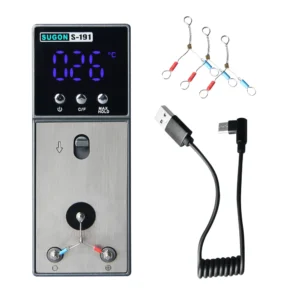
Soldering Iron Testers for Temperature Verification and Station Calibration
Your soldering station’s display shows the temperature you set — not necessarily the temperature at the tip. Heat loss through the tip body, wear, and calibration drift can create a significant gap between displayed and actual tip temperature. A soldering iron tester measures what is actually happening at the working surface, giving you the data needed to calibrate accurately and solder with confidence.
For repair technicians working on heat-sensitive components, phone logic boards, and fine-pitch SMD work, knowing your actual tip temperature is not a luxury — it is a requirement for consistent, damage-free results.
Measuring Actual Tip Temperature With a K-Type Sensor
Most soldering iron testers use a K-type thermocouple sensor to measure tip temperature directly at the contact point. The K-type thermocouple is the standard sensor type in electronics temperature measurement, covering the full range of soldering temperatures from 100°C to 500°C with reliable accuracy.
Units like the SUGON S-191 combine a digital readout with a K-type sensor in a compact benchtop format, giving you an instant reading the moment your tip contacts the sensor. This tells you immediately whether your station’s displayed temperature matches reality — and by how much it differs if calibration has drifted. Pair with soldering accessories including brass wool to clean the tip before measuring for the most accurate reading.
Identifying Calibration Drift and Tip Degradation
Calibration drift occurs gradually as soldering stations age, tips wear, and heating elements accumulate use hours. A station that read accurately when new may be running 20°C–40°C hotter or cooler than displayed after extended use — enough to cause cold joints on one end or component damage on the other.
Regular testing with a soldering iron tester catches drift before it affects your work. If your station consistently reads higher than actual tip temperature, you may be underheating joints without realising it. If actual temperature exceeds displayed temperature, sensitive components and PCB laminates are at risk. Testing takes seconds and gives you the data to adjust your station’s offset calibration accordingly.
Soldering Iron Testers for Professional and Workshop Use
For professional repair technicians, a soldering iron tester is part of regular station maintenance alongside tip replacement and cleaning. Verifying temperature accuracy before working on expensive logic boards, BGA components, or customer devices eliminates one variable from a process where consistency determines outcomes.
For hobbyists upgrading from entry-level stations to PID-controlled units like the YIHUA range, a tester confirms that the investment in better temperature control is delivering what the display promises. Use alongside a soldering station and soldering iron tips to maintain a fully verified, calibrated bench setup.
Where to Buy Soldering Iron Testers in the United Kingdom?
NeoSoldering stocks soldering iron testers with fast UK delivery, no hidden import fees, and all prices in British Pounds. Free delivery is available on orders over £50.
Browse our soldering stations, soldering iron tips, and soldering accessories to maintain a fully calibrated and reliable bench setup.
Frequently Asked Questions
What does a soldering iron tester actually measure?
A soldering iron tester measures the actual temperature at your soldering tip using a thermocouple sensor — typically a K-type sensor — and displays the reading digitally. This lets you compare your station’s displayed set temperature against the real tip temperature, identifying calibration drift and verifying that your station is performing accurately.
How often should I test my soldering iron’s temperature?
For hobby use, testing every few months or after replacing tips is sufficient. For professional repair work on sensitive components or customer devices, testing at the start of each working day ensures your station is within acceptable calibration tolerance before you begin. Test immediately if you notice changes in solder flow behaviour or joint quality that cannot be explained by technique or materials.
What is a K-type thermocouple and why is it used in soldering iron testers?
A K-type thermocouple is a temperature sensor made from two dissimilar metal alloys that generate a measurable voltage proportional to temperature. It covers the full soldering temperature range of 100°C–500°C accurately and responds quickly to temperature changes. K-type is the standard sensor type in electronics temperature measurement, making it the natural choice for soldering iron testers.
Can I calibrate my soldering station using a soldering iron tester?
Yes. Most PID-controlled soldering stations include an offset calibration function that lets you adjust the displayed temperature to match the measured actual temperature. Measure your tip temperature with the tester, compare against your station’s display, and enter the difference as a calibration offset in your station’s settings. This brings displayed and actual temperatures into alignment for more accurate, consistent soldering.
Do I need a soldering iron tester for hobby soldering?
For occasional hobby work on forgiving through-hole projects, a tester is not essential. For anyone working regularly with SMD components, heat-sensitive ICs, or expensive boards where temperature accuracy matters, a tester removes uncertainty from the process. If you have invested in a quality soldering station with PID control, a tester confirms that investment is delivering accurate results.
Showing the single result