

Solder Pots
Solder pots give you a reservoir of molten solder for fast, consistent tinning, batch through-hole soldering, and component lead preparation that individual iron work cannot match for speed.
Showing the single result
-
Original price was: £59.00.£44.50Current price is: £44.50.Take control of your soldering accuracy with instant tip temperature...Add to cart
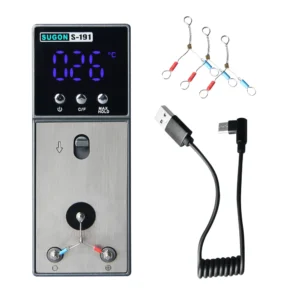
Solder Pots for Electronics Assembly, Tinning, and Through-Hole Soldering
A solder pot maintains a stable bath of molten solder at a set temperature, allowing you to tin wire ends, pre-solder component leads, and process multiple through-hole joints in a single dip rather than soldering each one individually.
Used in electronics assembly, repair workshops, and hobbyist benches, solder pots are particularly effective for batch work where speed and consistency matter more than the pinpoint control of a soldering iron.
Fast Tinning for Wires, Leads, and Component Terminals
Tinning wire ends and component leads by dipping into a solder pot takes a fraction of the time of hand soldering each one. A clean, freshly fluxed wire dipped into molten solder at the correct temperature emerges fully coated in under a second, ready for termination or assembly.
This technique is especially useful when preparing large quantities of wires for connectors, pre-tinning stranded wire before crimping, or coating bare copper leads that will be inserted into through-hole PCB pads. Pair with flux for cleaner wetting and more consistent results across every dip.
Consistent Temperature Control for Repeatable Results
A quality solder pot maintains bath temperature within a tight range, preventing the cold joints and incomplete wetting that result from temperature fluctuations. Most units offer a temperature range of 180°C–450°C, covering both leaded and lead-free solder alloys.
Stable temperature is particularly important for lead-free solder, which requires higher and more precise heat to flow correctly. A pot with PID-style regulation holds the bath at your set point even as thermal mass is absorbed by repeated dipping, keeping results consistent throughout a work session.
Solder Pots in a Complete Assembly or Repair Workflow
Solder pots complement rather than replace a soldering station. Use the pot for bulk tinning and lead preparation, then switch to your iron for precise board-level soldering and fine work. This combination speeds up repetitive tasks without sacrificing control where it matters.
For safe and efficient use, work on an anti-static mat or silicone mat to protect your bench from solder splatter. A fume extractor is strongly recommended — molten solder baths produce continuous fumes during operation that are harmful in enclosed spaces without adequate ventilation.
Where to Buy Solder Pots in the United Kingdom?
NeoSoldering stocks solder pots with fast UK delivery, no hidden import fees, and all prices in British Pounds. Free delivery is available on orders over £50.
Browse our soldering stations, soldering accessories, and flux to build a complete assembly or repair setup around your solder pot.
Frequently Asked Questions
What is a solder pot used for?
A solder pot maintains a bath of molten solder for tinning wire ends, pre-coating component leads, and batch through-hole soldering. It is faster than hand soldering for repetitive tasks and produces consistent results across multiple components dipped in a single session.
What temperature should I set my solder pot to?
For leaded solder, 250°C–300°C is typical. Lead-free solder requires higher temperatures, generally 300°C–370°C depending on the alloy. Always use the lowest effective temperature that produces clean wetting — excessive heat accelerates solder oxidation in the bath and reduces pot life.
Do I need flux when using a solder pot?
Yes. Applying flux to wire ends or component leads before dipping improves wetting, reduces oxidation, and produces cleaner, more consistent tinning. A flux pen or liquid flux applied immediately before dipping gives the best results. After dipping, clean flux residue with isopropyl alcohol and PCB cleaning tools.
How do I maintain a solder pot?
Skim oxidised solder from the surface of the bath regularly using a suitable tool — oxide buildup on the surface reduces wetting quality and contaminates dipped components. Keep the pot covered when not in use to slow oxidation. Top up with fresh solder as the level drops and replace the entire bath periodically if contamination builds up.
Is a solder pot safe to use at home?
Yes, with the right precautions. Use a fume extractor or ensure strong ventilation as molten solder produces continuous fumes. Work on a silicone mat to contain splatter. Keep water away from the pot entirely — contact between water and molten solder causes violent spattering. Safety glasses are strongly recommended during use.
Showing the single result