

Reflow Ovens
Reflow ovens solder entire PCB assemblies in a single controlled heating cycle — producing consistent, professional-grade joints across every component on the board simultaneously without the variability of hand soldering or hot plate reflow.
Showing the single result
-
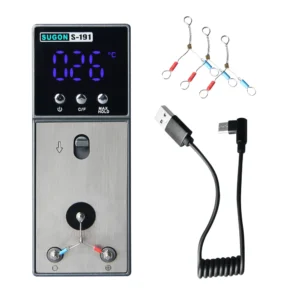
Original price was: £59.00.£44.50Current price is: £44.50.Take control of your soldering accuracy with instant tip temperature...Add to cart
Reflow Ovens
Reflow ovens solder entire PCB assemblies in a single controlled heating cycle — producing consistent, professional-grade joints across every component on the board simultaneously without the variability of hand soldering or hot plate reflow.
[PRODUCT GRID HERE]
Reflow Ovens for SMD Assembly, PCB Production, and Professional Electronics Work
Hand soldering places components one joint at a time. A reflow oven solders every component on a solder paste-printed board in a single automated cycle — heating the board through a defined temperature profile that activates flux, melts solder paste, and cools joints in a controlled sequence that produces consistent results regardless of component density or board complexity.
For hobbyists building their own PCBs, small-scale electronics producers, and repair technicians assembling replacement boards, a reflow oven removes the skill barrier and time investment of hand-soldering dense SMD assemblies — delivering factory-quality results on a bench setup.
The Reflow Temperature Profile and Why It Matters
A reflow oven follows a defined temperature profile with four distinct stages — preheat, soak, reflow, and cooling — each serving a specific purpose in producing reliable solder joints.
The preheat stage raises board temperature gradually, reducing thermal shock and allowing volatile solvents in the solder paste to evaporate without spattering. The soak stage holds temperature at an intermediate level, activating flux to clean pad and component surfaces before reflow. The reflow stage brings temperature above the solder liquidus point — 183°C for leaded solder, 217°C for lead-free — melting the paste and forming solder joints. The cooling stage brings the board back to ambient temperature at a controlled rate, preventing thermal stress and producing well-formed, shiny joint surfaces.
Reflow ovens with programmable profiles let you store and recall profiles for different solder types and board thicknesses, ensuring repeatable results across multiple production runs. Pair with solder paste and a preheating platform for a complete SMD assembly workflow.
Benchtop Reflow Ovens for Hobbyist and Small-Scale Production
Benchtop reflow ovens bring controlled reflow capability to hobby and small-scale production setups without industrial floor space or budget requirements. Converted toaster ovens with reflow controllers represent the entry point — functional but limited in profile accuracy and temperature uniformity. Purpose-built benchtop reflow ovens offer significantly better temperature uniformity across the chamber, programmable multi-stage profiles, and convection heating that produces more consistent results than radiant heat alone.
For hobbyists building custom keyboards, Arduino shields, ESP32 projects, and prototype PCBs with SMD components, a benchtop reflow oven removes the most technically demanding part of SMD assembly — achieving simultaneous reflow across all joints — and replaces it with a repeatable, profile-driven process. Combine with a hot air station for rework on individual components after reflow, and PCB cleaning tools and isopropyl alcohol for post-reflow board preparation.
Reflow Ovens Versus Hot Plates and Hot Air Stations
Each reflow method suits different scales and complexity levels. A hot plate provides simple bottom-up heating for single-sided boards on a budget — effective for low component density assemblies but lacking the profiled heating and cooling control that complex boards require. A hot air station suits individual component rework and localised reflow but cannot heat an entire board uniformly for full assembly reflow. A reflow oven combines profiled temperature control with full-board uniform heating — the correct tool for consistent SMD assembly on boards of any complexity.
For repair technicians adding SMD assembly capability to an existing rework bench, a reflow oven completes the toolkit alongside a hot air station, preheating platform, and soldering station — covering every stage from component placement through reflow, rework, and inspection.
Where to Buy Reflow Ovens in the United Kingdom?
NeoSoldering stocks reflow ovens with fast UK delivery, no hidden import fees, and all prices in British Pounds. Free delivery is available on orders over £50.
Browse our hot plates, preheating platforms, hot air stations, and soldering accessories for a complete SMD assembly and rework setup.
Frequently Asked Questions
What is a reflow oven used for?
A reflow oven heats a PCB with solder paste and placed SMD components through a controlled temperature profile, melting the paste and forming solder joints across every component simultaneously. It is the standard method for SMD PCB assembly, producing consistent joints on dense boards that hand soldering and hot plate reflow cannot match for reliability and repeatability.
What is the difference between a reflow oven and a hot plate?
A reflow oven heats the board through a multi-stage profiled cycle — preheat, soak, reflow, and cooling — with controlled temperature ramp rates at each stage. A hot plate applies static bottom-up heat without a controlled profile. For simple single-sided boards at low quantities, a hot plate is a lower-cost alternative. For complex multilayer boards, consistent production results, and lead-free solder paste reflow, a reflow oven produces significantly more reliable outcomes.
Can I use a reflow oven for lead-free solder paste?
Yes. Most benchtop reflow ovens reach the temperatures required for lead-free solder paste reflow — peak temperatures of 240°C–260°C above the lead-free liquidus point of 217°C. Ensure your oven’s programmable profile can achieve and hold the required peak temperature with sufficient dwell time for complete joint reflow across the board’s thermal mass. Lead-free profiles require more precise temperature control than leaded profiles due to the narrower processing window.
How do I choose the right reflow oven for hobby use?
For hobby PCB assembly, prioritise temperature uniformity across the chamber, programmable multi-stage profiles, and a chamber size matched to your typical board dimensions. Convection heating produces more uniform results than radiant heat alone. A reflow controller with thermocouple feedback provides more accurate profile execution than open-loop temperature control. For occasional prototype assembly, a mid-range benchtop oven with basic profile programming covers most hobby needs effectively.
Do I need a reflow oven if I already have a hot air station?
A hot air station handles individual component rework and localised reflow effectively but cannot heat an entire board uniformly for full SMD assembly reflow. For building PCBs from bare boards with solder paste, a reflow oven produces significantly better and more consistent results than attempting full-board reflow with a hot air station. If you are assembling your own PCBs regularly rather than just reworking individual components, a reflow oven is a worthwhile addition to your bench setup.
Showing the single result