

PCB Holders
PCB holders grip your circuit board securely during soldering, rework, and inspection — freeing both hands for your tools and giving you stable, adjustable access to every part of the board without constant repositioning.
Showing the single result
-
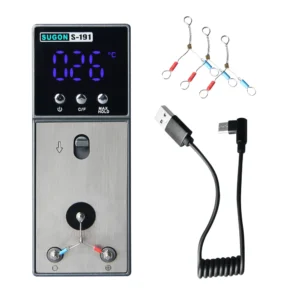
Original price was: £59.00.£44.50Current price is: £44.50.Take control of your soldering accuracy with instant tip temperature...Add to cart
PCB Holders for Soldering, Rework, and Board-Level Electronics Repair
Holding a PCB by hand while soldering introduces movement, inconsistent angles, and fatigue that directly affects joint quality. A PCB holder clamps the board firmly at a fixed position and angle, leaving both hands free to operate your soldering iron, hot air station, or rework tools with full control and precision.
From simple adjustable clamp holders for hobby bench work to rotating vice-style holders for professional repair, a PCB holder is one of the most practical additions to any electronics workspace alongside a soldering station and helping hands.
Stable Clamping for Consistent, Accurate Soldering
A PCB holder that grips the board firmly without flexing or shifting under tool pressure gives you a stable reference point for every joint. This stability matters most during fine-pitch SMD soldering, where even slight board movement causes bridges, misaligned components, and cold joints that require rework.
Quality PCB holders use smooth-edged clamps that grip the board by its edges without contacting components or traces on the board surface. Adjustable clamp width accommodates different board sizes from small Arduino shields to full-size motherboards. Non-slip bases keep the holder fixed on the bench during use — a holder that slides or tips under iron pressure defeats its own purpose entirely. Pair with helping hands for additional component-level positioning alongside board-level clamping.
Rotating and Tilting Bases for Full Board Access
A PCB holder with a rotating base lets you work on all four sides of a board without unclamping and repositioning — rotating the board to bring each edge within comfortable reach of your iron. This is particularly valuable during through-hole assembly where component leads need trimming and soldering on the reverse side, and during inspection where you need to view the board from multiple angles.
Tilting adjustment positions the board at a comfortable working angle, reducing neck and shoulder strain during extended soldering sessions. Angled positioning also improves visibility of joint surfaces during soldering and makes it easier to apply solder to the correct side of a pad without the iron tip obscuring the view. For rework sessions using a preheating platform, choose a holder designed to position the board above the platform surface while maintaining stable clamping throughout the heating cycle.
PCB Holders for Professional Repair Work
For professional repair technicians working on phone logic boards, console motherboards, and laptop PCBs, a dedicated board holder matched to the work provides the stability and access needed for chip-level repair. The RELIFE TF5 and similar multifunctional holders clamp motherboards and CPU boards securely for precise chip-level soldering, BGA rework, and connector replacement on boards where component density leaves little margin for movement or positional error.
Combine a PCB holder with a preheating platform underneath for hot air rework, a magnifying glass or electronics microscope for inspection, and isopropyl alcohol with PCB cleaning tools for post-rework cleanup — building a complete professional rework station around the holder as the central workpiece support.
Where to Buy PCB Holders in the United Kingdom?
NeoSoldering stocks PCB holders with fast UK delivery, no hidden import fees, and all prices in British Pounds. Free delivery is available on orders over £50.
Browse our helping hands, soldering stations, preheating platforms, and soldering accessories to build a complete, organised rework bench.
Frequently Asked Questions
What is the difference between a PCB holder and helping hands?
A PCB holder clamps the board by its edges, providing stable full-board support for soldering and rework across the entire surface. Helping hands use adjustable clamp arms to hold boards, wires, and individual components at any angle. For most bench setups both tools complement each other — a PCB holder for board-level work and helping hands for component positioning and wire soldering.
What size PCB holder do I need?
Choose a holder that accommodates the largest board you regularly work on with some clamping margin beyond the board edge. Most adjustable holders cover boards from approximately 50mm up to 300mm in width. For larger motherboards and full-size PCBs, check the maximum clamp width before purchasing. A holder too narrow for your board cannot clamp securely and provides no stability benefit over hand-holding.
Can a PCB holder damage my board?
Quality PCB holders use smooth clamp edges that grip the board without scratching the PCB surface or contacting traces and components near the board edge. Avoid holders with serrated or sharp clamp jaws that can damage PCB laminates under clamping pressure. For boards with edge-mounted components or connectors, check that the clamp position avoids contact with populated areas before tightening.
Do I need a PCB holder for basic through-hole soldering?
For occasional through-hole soldering on simple boards, a PCB holder is helpful but not essential. For any regular soldering work, SMD assembly, rework, or inspection, a holder that frees both hands and holds the board at a comfortable angle improves results and reduces fatigue significantly. The time saved on repositioning and the improvement in joint consistency makes a PCB holder worthwhile from early in your electronics journey.
Can I use a PCB holder with a preheating platform?
Yes, and this combination is standard practice in professional SMD rework. Position the PCB holder to suspend the board just above the preheating platform surface, allowing bottom-side heat to reach the board while the holder maintains stable clamping throughout the preheat and rework cycle. Ensure the holder material is rated for the preheat temperatures involved — typically 100°C–150°C — to prevent deformation during extended heating.
Showing the single result