

Hot Plates
Hot plates provide a flat, controlled heating surface for PCB preheating, solder paste reflow, component drying, and heat-sensitive assembly work — delivering stable, even heat across the entire work surface without the localised intensity of a soldering iron or hot air station.
Showing the single result
-
Original price was: £59.00.£44.50Current price is: £44.50.Take control of your soldering accuracy with instant tip temperature...Add to cart
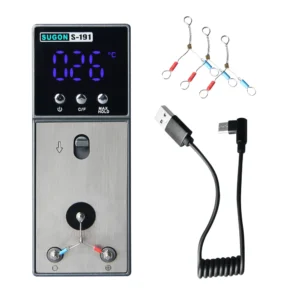
Hot Plates for PCB Reflow, Preheating, and Electronics Assembly
A hot plate heats from below across a flat surface, warming everything placed on it evenly and gradually rather than applying intense localised heat from above. In electronics work this bottom-up, distributed heating approach suits tasks where temperature uniformity across the entire board or component matters more than pinpoint precision — preheating PCBs before rework, reflowing solder paste on simple assemblies, drying boards after cleaning, and softening adhesives during device teardown.
The distinction between a hot plate and a preheating platform is primarily one of application and temperature range — hot plates often reach higher temperatures and suit a broader range of tasks beyond PCB-specific preheating.
Solder Paste Reflow on Simple PCB Assemblies
For hobbyists and small-scale assemblers building single or double-sided PCBs with solder paste, a hot plate provides a straightforward reflow method without the cost and complexity of a dedicated reflow oven. Solder paste applied to pads and components placed in position reflow as the plate temperature rises, producing soldered joints across the entire board simultaneously.
This approach works best on simple, single-sided boards with standard SMD components where temperature uniformity across the board is achievable on a flat plate surface. Apply flux to improve paste flow, monitor board temperature with a thermocouple or infrared thermometer, and remove the board promptly when reflow is complete to begin controlled cooling. For multilayer boards, complex assemblies, or production quantities, a reflow oven with profiled heating and cooling stages produces more consistent results.
PCB Preheating and Component Removal Assistance
A hot plate used as a preheating surface brings the entire board to an intermediate temperature before hot air rework, reducing the temperature differential that causes thermal stress on multilayer boards and dense assemblies. Placing the board on a hot plate set to 100°C–150°C for several minutes before applying hot air from a hot air station narrows the gap between ambient board temperature and reflow temperature, reducing the localised heat required and protecting the PCB laminate.
Hot plates also assist with device teardown and adhesive softening. Phone screens, console face plates, and tablet displays bonded with OCA adhesive or hot-melt glue separate more easily after the assembly is warmed on a hot plate at 60°C–80°C — softening the adhesive enough for pry tools to separate the join cleanly without cracking the display glass. This technique is standard practice in phone repair and is significantly safer than attempting cold separation on brittle display assemblies.
Temperature Control and Safety for Hot Plate Use
Accurate temperature control is the most important feature in an electronics hot plate. Uncontrolled or poorly regulated heat overshoots target temperatures, pre-reflowing solder joints before the board is ready, damaging temperature-sensitive components, or scorching PCB laminates during extended preheating.
PID-regulated hot plates maintain surface temperature within a tight range at the set point, preventing overshoot and holding temperature stable throughout the heating cycle. A surface temperature display — or an external thermocouple — confirms actual plate temperature rather than relying on a dial calibration that may drift with use. Always work on a silicone mat around the hot plate to protect bench surfaces from radiated heat, and use appropriate tools to handle boards and components at elevated temperatures — never touch boards directly after extended hot plate heating.
Where to Buy Hot Plates in the United Kingdom?
NeoSoldering stocks hot plates with fast UK delivery, no hidden import fees, and all prices in British Pounds. Free delivery is available on orders over £50.
Browse our preheating platforms, reflow ovens, hot air stations, and soldering accessories for a complete heat management and reflow setup.
Frequently Asked Questions
What is the difference between a hot plate and a preheating platform?
A preheating platform is designed specifically for PCB preheating before hot air rework, typically operating at 100°C–200°C with ESD-safe surfaces and formats suited to board support. A hot plate is a more general-purpose heating surface that reaches higher temperatures and suits a broader range of tasks including solder paste reflow, adhesive softening, component drying, and device teardown assistance. For dedicated PCB rework preheating, a preheating platform is the more focused tool. For versatility across multiple heating tasks, a hot plate offers broader application.
Can I use a hot plate as a reflow oven substitute?
For simple single-sided PCBs with standard SMD components, a hot plate can reflow solder paste effectively with careful temperature monitoring. It does not replicate the profiled heating and cooling stages of a reflow oven — the controlled ramp, soak, reflow, and cooling phases that produce consistent, void-free joints on complex assemblies. For prototyping and small quantities on simple boards, a hot plate is a practical lower-cost alternative. For reliable production results on multilayer or complex boards, a reflow oven remains the correct tool.
What temperature should I use for solder paste reflow on a hot plate?
For lead-free solder paste, bring the plate to approximately 240°C–260°C for reflow — above the lead-free liquidus temperature of 217°C with enough margin for complete joint reflow. For leaded solder paste, 200°C–220°C is typically sufficient. Monitor board surface temperature with a thermocouple rather than relying solely on the plate’s display, as there is always a temperature differential between the plate surface and the board surface resting on it.
Is a hot plate safe for all PCB components?
Most standard SMD components withstand hot plate reflow temperatures safely when used within manufacturer-specified reflow profiles. Temperature-sensitive components — certain electrolytic capacitors, connectors with plastic housings, and some crystals — have maximum temperature ratings that must not be exceeded. Check component datasheets for maximum reflow temperatures before using a hot plate on populated boards with mixed component types.
How do I use a hot plate for phone screen removal?
Set the hot plate to 60°C–80°C and place the device face-down on the heated surface. Allow 2–3 minutes for the adhesive to soften uniformly across the display assembly. Test the join with a pry tool at the corner — correctly softened adhesive allows gradual separation without excessive force. Increase temperature slightly if the adhesive has not softened sufficiently, but avoid exceeding 90°C–100°C on most phone assemblies to prevent damage to display components and battery cells.
Showing the single result