

Desoldering Pumps
Desoldering pumps remove molten solder from joints, pads, and through-hole legs quickly and cleanly — giving you the most straightforward way to correct mistakes and replace components without dedicated station equipment.
Showing the single result
-
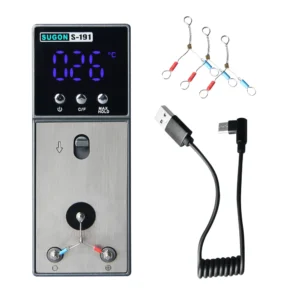
Original price was: £59.00.£44.50Current price is: £44.50.Take control of your soldering accuracy with instant tip temperature...Add to cart
Desoldering Pumps for Through-Hole Component Removal and Mistake Correction
Every soldering session involves mistakes — solder bridges, wrong components, cold joints that need clearing. A desoldering pump is the fastest and most accessible tool for removing unwanted solder from through-hole pads and component legs, clearing holes cleanly for replacement parts without requiring a full desoldering station.
Compact, affordable, and effective, desoldering pumps are an essential addition to any bench alongside a soldering station — from beginner kits through to professional repair setups.
Spring-Loaded Vacuum for Fast, Single-Action Solder Removal
A spring-loaded desoldering pump works in a single action — heat the joint with your iron until the solder melts, position the pump nozzle over the pad, and release the plunger. The vacuum created draws molten solder into the chamber, clearing the pad in one motion.
Timing is critical. The pump must be triggered immediately as the solder reaches full melt — a half-second delay allows the solder to begin solidifying, reducing vacuum effectiveness. With practice, the timing becomes instinctive and through-hole pads clear cleanly and consistently. Pair with flux on stubborn or oxidised joints to improve solder flow and make extraction easier.
Nozzle Quality and Plunger Maintenance
The nozzle is the most performance-critical part of a desoldering pump. A heat-resistant PTFE or silicone nozzle withstands repeated contact with molten solder without degrading, maintaining a clean seal against the pad for maximum vacuum. Cheap plastic nozzles melt, deform, and lose their seal quickly — reducing effectiveness and requiring frequent replacement.
Plunger seals wear with use and should be replaced when vacuum strength noticeably drops. Most quality pumps include replacement seals or have readily available spare parts. Clean the chamber after every few uses by disassembling and clearing accumulated solder from the barrel — a blocked chamber reduces vacuum and makes extraction unreliable.
Desoldering Pumps Versus Solder Wick
Desoldering pumps and solder wick solve the same problem through different methods. A pump removes the bulk of solder from a through-hole joint quickly in a single action, making it faster for clearing multiple legs on multi-pin components. Solder wick absorbs residual solder from pads and traces after bulk removal, leaving a cleaner surface for rework.
For most repair work, using both tools together produces the best results — pump first to clear the majority of solder, then wick to clean remaining residue from the pad surface. Keep both available alongside your soldering accessories for a complete mistake-correction toolkit. For high-volume through-hole desoldering, a desoldering rework station with integrated vacuum provides faster and more consistent results than a manual pump.
Where to Buy Desoldering Pumps in the United Kingdom?
NeoSoldering stocks desoldering pumps with fast UK delivery, no hidden import fees, and all prices in British Pounds. Free delivery is available on orders over £50.
Browse our soldering stations, desoldering rework stations, and soldering accessories for a complete desoldering and rework setup.
Frequently Asked Questions
How does a desoldering pump work?
A spring-loaded plunger is compressed and locked in position. The nozzle is placed over a heated, molten solder joint and the release button is pressed. The plunger springs back, creating a vacuum that draws molten solder up through the nozzle and into the chamber. The collected solder is ejected by compressing the plunger again for the next use.
What is the difference between a desoldering pump and solder wick?
A desoldering pump removes bulk solder from through-hole joints quickly through vacuum suction. Solder wick absorbs solder from pads and traces through capillary action when heated with an iron. Pumps are faster for multi-pin through-hole components. Wick is better for fine residue removal and surface-mounted pad cleaning. Using both together produces the cleanest results on most rework tasks.
Why is my desoldering pump not picking up solder?
The most common causes are mistimed triggering — releasing the pump before the solder is fully molten — a worn plunger seal reducing vacuum strength, or a blocked chamber from accumulated solder. Clean the barrel, check the plunger seal condition, and ensure you are triggering the pump at the exact moment the solder reaches full melt. Adding flux to the joint improves solder flow and gives a slightly wider window for effective extraction.
Can I use a desoldering pump for SMD components?
Desoldering pumps are designed primarily for through-hole joints where solder fills a barrel hole. For SMD component removal, a desoldering rework station with hot air is the correct tool. Solder wick is more effective than a pump for cleaning SMD pads after component removal. Attempting to use a pump on SMD joints risks lifting pads due to the mechanical force applied.
How do I maintain a desoldering pump?
Eject accumulated solder from the chamber after every few uses by firing the empty pump. Disassemble and clean the barrel periodically with a small brush or pipe cleaner. Inspect the plunger seal for wear and replace when vacuum strength drops. Keep the nozzle clear of solidified solder blockages — a blocked nozzle prevents effective vacuum from forming at the pad surface.
Showing the single result